For people living with migraines, the pain can be debilitating. Weeks of relentless headaches can mean missed work, canceled plans and a diminished quality of life. When medications stop helping, some patients may have another option: surgery that targets nerves outside the brain.
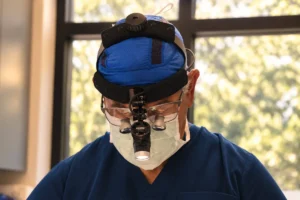
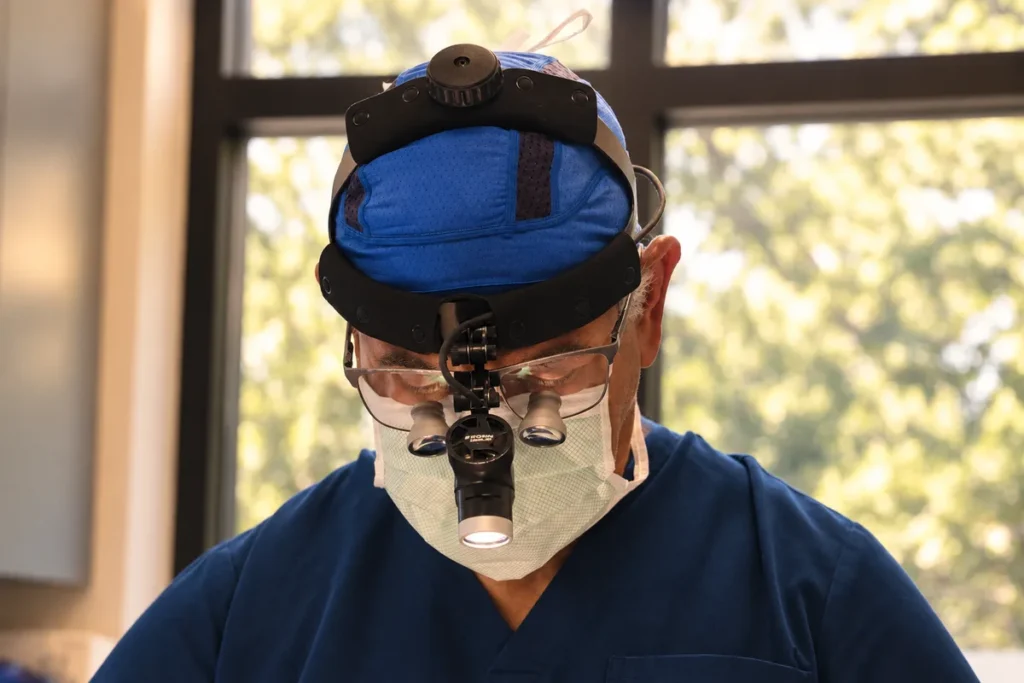
Dr. Marcelo Hochman, recognized by HealthLinks Magazine readers as Best Plastic Surgeon, has offered migraine surgery for 20 years. The approach focuses on nerves that can contribute to headache pain and may help make other treatments more effective.
Migraine is a central nervous system condition with a genetic component. Although medications target processes in the brain, outside factors such as weather changes, perfumes, smoke, certain foods and stress can trigger or intensify attacks.
“Most patients that have a migraine can pinpoint with a finger where it starts,” Hochman says. Pain around the temples or back of the head often corresponds to an area where nerves emerge from the skull and extend into the scalp or face.
The goal is to reduce the signals those nerves send to the brain. Hochman compares the process to restarting a frozen computer, giving an overstimulated brain a chance to reset and raising the threshold needed to trigger pain.
Starting with nerve blocks
Treatment typically begins with nerve blocks, in which Dr. Hochman injects medication around targeted nerves. For pain and pressure around the eyes and midface, a nasal spray can block signals from the sphenopalatine ganglion, a collection of nerve cells behind the nose.
Blocks may provide immediate relief. Repeated over a short period, they can also help change the brain’s response to pain, potentially allowing medications that had stopped working to become effective again.
When surgery makes sense
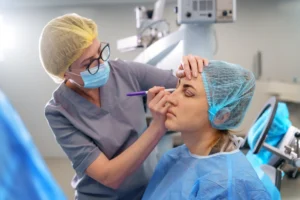
Surgery may be considered when patients respond to nerve blocks but need longer-lasting relief. During the outpatient procedure, performed under anesthesia, Dr. Hochman frees the affected nerves from surrounding muscle and cushions them with the patient’s own fat to reduce irritation and pressure.
“It’s not the initial treatment. It is a complementary treatment,” he says. “I have seen people come in who have had weeks and weeks and weeks of unremitting headaches who no longer respond to medications.”
Dr. Hochman reports that about 75% to 80% of his surgical patients experience at least a 50% reduction in headache frequency and/or severity. About 10% experience especially dramatic results, while another 10% see no improvement. Importantly, the surgery allows the brain to be more sensitive to medications which previously did not work.
The procedure is not a substitute for neurological care or medications. Patients must first receive a diagnosis from a neurologist and continue working with their neurologist after surgery.
Dr. Hochman says. “It’s an option for some patients so they can go back to work or school and get back their life.”