
If you’ve noticed your hair thinning or your part getting wider, you’re not imagining it, and you’re not alone. For many people, thinning hair and the first signs of facial aging show up around the same time. That’s why some patients choose to pair hair restoration and injectables into one plan, sometimes called a confidence lift, instead of tackling one concern at a time.
At The Facial & Body Surgery Center, this usually means combining NeoGraft hair restoration with Botox, Jeuveau, Xeomin, or dermal fillers. Here’s what each part involves and how they can work together.
What Is a Confidence Lift?
A confidence lift isn’t a single treatment. It’s a plan built around two different tools: hair restoration to address thinning, and injectables to soften lines and restore volume in the face.
NeoGraft is an FDA-approved, minimally invasive hair restoration method that uses follicular unit extraction, or FUE, to move individual hair follicles to thinning areas without a linear scar. Injectables fall into two categories. Neurotoxins like Botox relax the muscles that cause expression lines, while dermal fillers restore volume using hyaluronic acid, collagen, or a patient’s own fat.
Together, the goal is a fuller, more refreshed look without necessarily needing a more invasive surgical facelift.
Who Can It Help?
Hair restoration through NeoGraft is designed for both men and women experiencing hair thinning or loss who want a natural looking result. Injectables can help people who notice forehead wrinkles, frown lines, crow’s feet, or volume loss in the cheeks or around the mouth.
How Each Part Works
NeoGraft Hair Restoration
NeoGraft uses controlled suction to gently extract individual hair follicles for transplant, without the linear scarring associated with older strip-based techniques. For patients who prefer a non-surgical option, the practice also offers PRP, or platelet-rich plasma, treatment.
Neurotoxins and Dermal Fillers
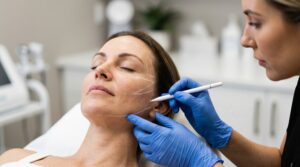
Neurotoxins work by blocking nerve signals to the target muscle, which relaxes the surrounding skin and softens wrinkle formation. They’re commonly used for forehead wrinkles, frown lines, crow’s feet, bunny lines, neck wrinkling, and chin dimpling, and some patients use them preventively at a younger age. Dermal fillers work differently. They add volume and shape using hyaluronic acid, collagen, or fat transfer, and are often used for nasolabial folds, marionette lines, cheek volume, and lip enhancement.
What to Expect
NeoGraft is performed without anesthesia and typically takes six to eight hours. Most patients return to work the next day, with little visible evidence of the procedure.
Neurotoxin results generally appear within three to five days, reach full effect around three weeks, and last about four to six months depending on the product. Dermal fillers can last anywhere from a few months to several years. Both types of injectables involve minimal downtime, though temporary redness or bruising at the injection site is common.
Because NeoGraft and injectables have different timelines, your provider can help you plan the order and spacing that works best for your schedule and healing.
Risks and Considerations
NeoGraft is described as minimally invasive with minimal downtime, but as with any hair restoration procedure, results and natural appearance can vary from person to person, and it’s worth discussing realistic expectations with your provider.
Injectables are generally considered to have minimal downtime, but temporary redness, bruising, or swelling at the injection site can occur. It’s important to have these treatments performed by an experienced, qualified provider.
A consultation is the best place to go over your health history and what to expect for your specific situation.
When to See a Provider
If thinning hair or facial lines have been on your mind, a consultation is a low-pressure way to learn your options. Either Dr. Hochan or Dr. Tarabishy can look at your hair and skin together and talk through whether NeoGraft, injectables, or both make sense for you.
Taking the Next Step
Hair restoration and injectables address different concerns, but together they offer a more complete way to feel confident in your reflection. If you’re curious whether this combination is right for you, schedule a consultation with The Facial & Body Surgery Center to talk through your options. Book your procedure after your consultation, and we’ll apply your consultation fee toward the total.